 · revenue engine
Personalised campaigns
Give every buyer a reason to write back.
Hyper writes every approach around one company and the situation that company is dealing with. An approach that could have gone to a hundred businesses gets deleted by all hundred.
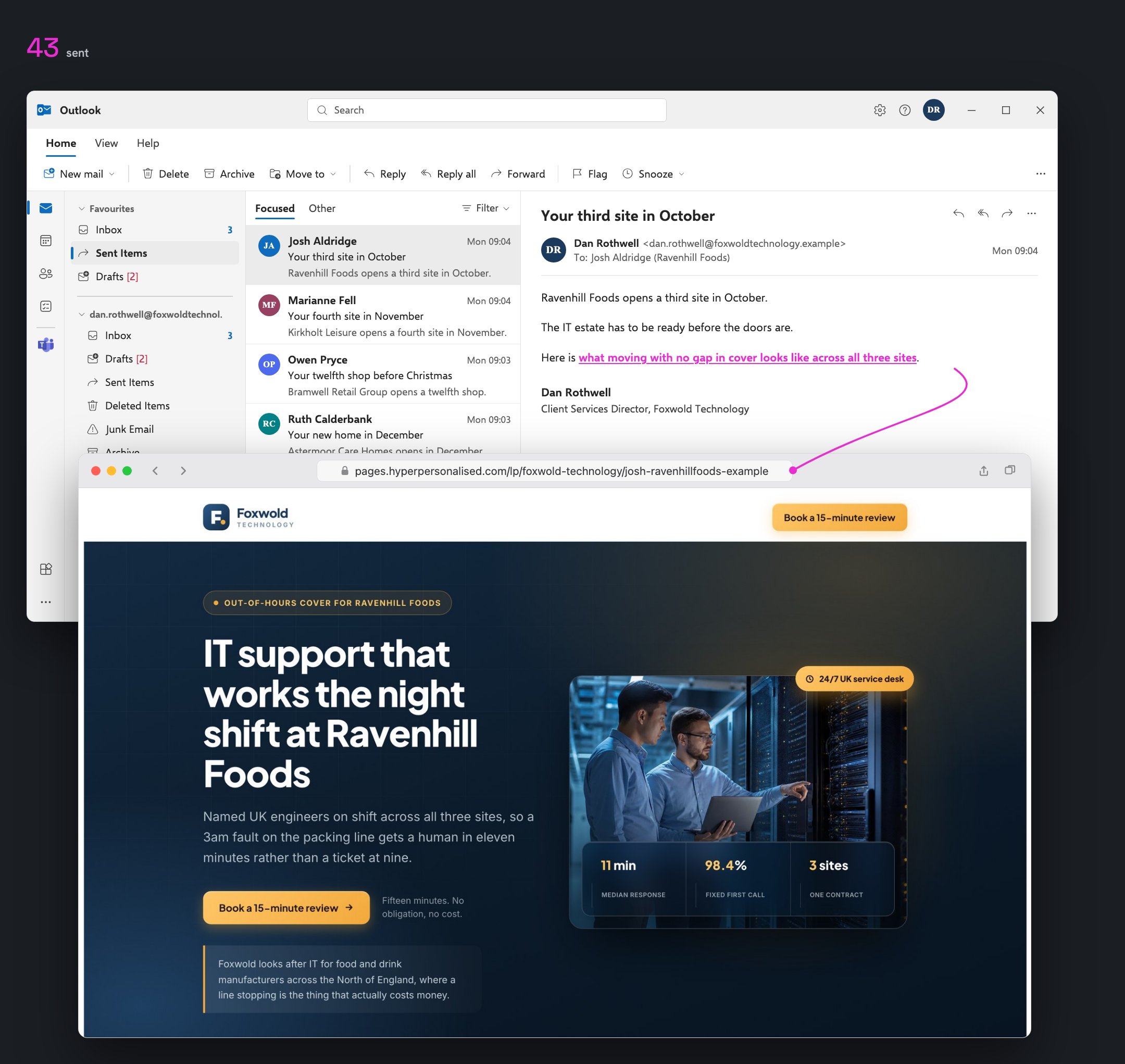
One company, one argument, from first line to last.
01 / OPEN
The first line is about the buyer's own business.
Hyper opens on the change the buyer is already living with. A buyer who recognises the situation in the opening line keeps reading.
- 01
Choose one opening
Hyper picks the single fact about a buyer's business that earns the next ten seconds.
- 02
Say it plainly
The writing sounds like somebody who did the reading and had something to say.
02 / CONTINUE
The page the buyer opens carries the same argument.
A buyer who clicks arrives on a page written for that company alone. The page takes the opening idea further and shows what working together would look like.
- 01
Carry one idea
The page picks up exactly where the opening line finished.
- 02
Wear the buyer's name
Every page carries the buyer's own company name and colours.
03 / CONVERT
The reply arrives with the hard part done.
A buyer who writes back has already read a clear argument about their own business. Your salesperson takes the conversation forward without starting again from the beginning.
- 01
See what the buyer saw
Your salesperson reads the exact approach and page that earned the reply.
- 02
Move straight to a meeting
The next conversation opens on shared ground instead of a cold introduction.
Before the next conversation
What makes an approach worth a buyer's attention.
Why pair a message with a page?
A message earns a few seconds of attention. A page written for one company gives the argument room to make its case.
What makes an approach personal?
The research changes the argument itself. A different company would receive a different opening, a different example and a different page.
Does the page do the selling?
The page prepares a buyer for a conversation with your team. Your salespeople make the case, agree the terms and win the business.
Start a better conversation